
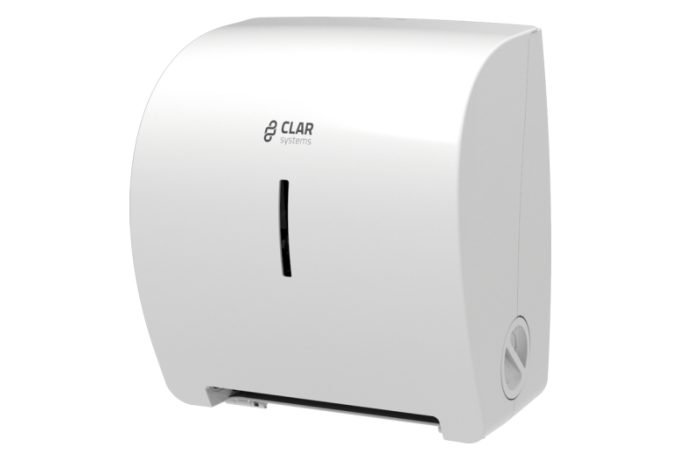
Electric hand dryers or paper towels: which to choose
Electric hand dryers or paper towels: what actually works in a washroom
Hand drying is the step everyone forgets and nobody budgets for. Yet in any washroom that receives staff, customers and visitors all day, it decides how fast people move through, how clean the room feels and how much you spend every month on consumables. The choice comes down to two options: an electric hand dryer or paper hand towels.
This guide looks at both from the two angles that matter: what the person using the washroom experiences, and what the business paying the bill sees in cost, maintenance and reputation. There is no universal winner. There is a right answer for your traffic, your site and your service model.
How to judge a hand-drying system
Before comparing products, fix the criteria. In professional settings four factors decide most of the outcome:
- Hygiene: contact with surfaces, airborne particles and cross-contamination risk.
- Speed and throughput: how long each person occupies the drying point at peak hours.
- Running cost: electricity, consumables, refills, service and staff time.
- Reliability and perception: breakdowns, empty dispensers and the impression the washroom leaves.
Treated separately, each option looks good. Judged against these four together, the decision becomes clear.
Electric hand dryers
Advantages for the user
- No contact: with a modern sensor dryer the hands touch nothing, which cuts the surface contamination that towel dispensers and bins invite.
- No waste to handle: nothing to pull out, drop or find on the floor when the bin is full.
- Always available: a working dryer never runs out at the end of a busy shift, unlike a dispenser that empties mid-service.
Drawbacks for the user
- Time: older or low-power models take noticeably longer than a towel, which builds queues at peak times.
- Noise: dryers are loud. In small or quiet rooms this is a real complaint, and high-speed models are the noisiest.
- Perception: users still associate some dryers with slow drying and, fairly or not, with spreading bacteria.
Advantages for the business
- Low running cost: once installed, the dryer consumes only electricity. There is no consumable to reorder, store or restock daily.
- Fewer service touches: no refill round means less staff time and fewer stockouts in the washroom.
- Less waste: no paper to buy, transport or dispose of, which simplifies cleaning and waste handling.
Drawbacks for the business
- Upfront investment: a quality dryer costs more to buy and install than a dispenser, including the electrical point.
- Maintenance: dryers need periodic cleaning of filters and airways, and a failure means the drying point is out of service until repaired.
- Electricity dependency: during a power cut, a dryer is useless. A towel dispenser is not.
Paper hand towels
Advantages for the user
- Speed: drying with a paper towel is fast and predictable, so people spend less time at the point.
- Control: the user decides how much towel to take, which suits people who want a thorough dry.
- Familiarity: no learning curve and no waiting, which many visitors simply prefer.
Drawbacks for the user
- Touch points: the dispenser lever and the waste bin are handled by everyone who uses the room.
- Mess: overflowing bins and towels on the floor are a common sight at busy sites.
- Availability: an empty dispenser leaves the user with nothing to dry their hands.
Advantages for the business
- Low entry cost: dispensers and refills are cheap to start with, so the initial outlay is small.
- Flexible format: folded, roll and centre-feed systems can be matched to traffic and to the size of the washroom.
- Hygiene when specified well: a hands-free or sensor dispenser with good paper gives a fast, dry result with minimal contact.
Drawbacks for the business
- Ongoing consumable cost: paper, refills and the staff time to restock them run for as long as the washroom operates.
- Stock and logistics: every washroom needs a refill routine and storage, and running out is highly visible.
- Waste volume: paper means bins to empty, waste to remove and a floor to keep clean.
Head-to-head: how the two compare in practice
- Hygiene: a sensor dryer wins on contact, since nothing is touched. A well-specified towel system is close behind and dries faster. Poorly maintained versions of either are worse than the alternative.
- Throughput: paper towels are usually quicker per person. In high-traffic washrooms this matters more than anything else, because drying time sets the queue.
- Running cost: for moderate and high traffic, a dryer is normally cheaper over its life, because there is nothing to consume. For very low traffic, refills cost little and the dryer's upfront price may not pay back.
- Reliability: a towel system fails when the refill runs out, which staff can fix in seconds. A dryer fails when it breaks, which takes a technician.
- Environment: dryers avoid paper waste but consume electricity. Paper is recyclable but still consumed and trucked. The greener choice depends on how your region generates power, not on marketing.
How to choose for your site
The right answer depends much less on the product than on where it is installed:
- Office washrooms with moderate traffic: a good sensor dryer is usually the cleanest, cheapest long-run option, and it removes the refill round entirely.
- Restaurants, bars and venues at peak hours: paper towels, or a hybrid layout with both, keep people moving. Queues at the dryers hurt the customer experience more than the consumable cost.
- Healthcare, childcare and food handling: speed and single-use hygiene push towards a hands-free towel system, paired with good soap and a scheduled cleaning routine.
- Industrial and outdoor sites: heavy dirt needs the fastest dry, so paper tends to win, with refuse handling built into the cleaning contract.
A hybrid washroom, one dryer plus one paper dispenser, is a pragmatic answer for mixed traffic. It gives fast throughput at peak, a backup when either system is down, and a clear choice for the user.
What to specify, whichever you pick
If you choose a dryer
- Prefer a high-speed, sensor-activated model with a low noise rating for its class.
- Plan the electrical point and mounting height during installation, not after.
- Book filter and airway cleaning into the maintenance schedule.
- Choose a robust unit for washrooms with heavy public use.
If you choose paper towels
- Match the system to traffic: folded for low use, roll or centre-feed for high use.
- Specify hands-free or sensor dispensing to cut contact points.
- Set a refill and bin-emptying routine per washroom, with a clear owner.
- Keep a buffer stock on site so an empty dispenser never becomes a complaint.
Where the decision sits in the wider hygiene plan
Hand drying is one step in a chain. Soap, drying and disinfection only work together: a fast dry after a weak soap gives a poor result, and the best dryer in the world does not help if the soap dispenser is empty. When reviewing a washroom, treat drying as part of the whole routine alongside soap, disinfectant and air care, and buy the pieces as a system rather than as separate purchases.
Explore the categories below to compare the products that cover each part of that routine.
Frequently asked questions
Are electric hand dryers more hygienic than paper towels?
A sensor dryer removes contact entirely, since nothing is touched. A well-specified hands-free towel system is close behind and dries faster. The decisive factor is maintenance: a dirty dryer or an overflowing bin is less hygienic than either option properly kept.
Which is cheaper in the long run?
For moderate and high traffic, dryers usually cost less over their service life because there is no consumable to buy. For very low traffic, the upfront cost of a dryer may not repay, and paper refills stay the cheaper route.
Is one option better for the environment?
Dryers avoid paper waste but use electricity. Paper is recyclable but still consumed and transported. The greener choice depends on how your electricity is generated and on local waste handling, not on the product alone.
Can I install both in the same washroom?
Yes, and for mixed traffic it is a sound choice. A dryer plus a paper dispenser gives fast throughput at peak times and a backup when either system is out of action.
What matters most when I specify a system?
Traffic level, peak-hour speed and the cleaning routine you can realistically sustain. Match the product to how the washroom is actually used and to who restocks it, rather than to the lowest purchase price.
Continue comparing
These categories cover the hand-drying and washroom routine end to end:
Share this content