
How to clean white worktops safely
White worktops sell cleanliness before anyone touches them. In a restaurant, clinic, office kitchen or holiday rental, a white surface shows grease, coffee marks, limescale, dye transfer and poor rinsing immediately. That is useful for control, but it also means the wrong cleaner can leave dull patches, sticky residue or a yellow shadow that looks like neglect.
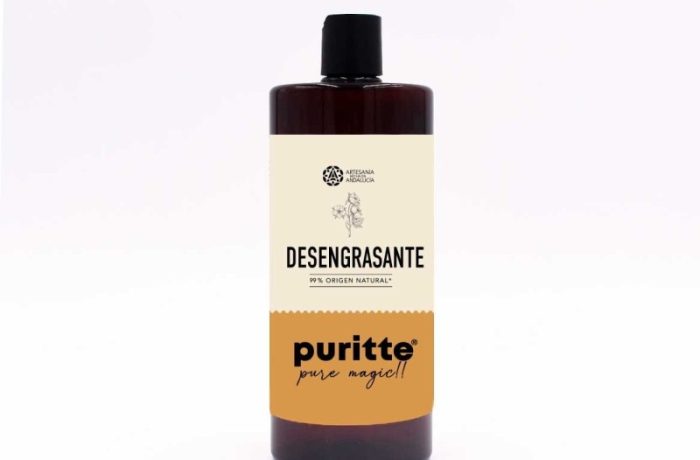
This guide compares Puritte Natural Origin Degreaser with Cif Ammonia Cream for cleaning white worktops in professional environments. The question is not only which product removes dirt. The real question is which product cleans often, rinses fast, protects the surface and keeps the workplace pleasant for the team using it every day.
Why white worktops are easy to mark
White worktops make every cleaning mistake visible. Grease can look grey, coffee and tea can leave beige marks, tomato and spices can tint porous areas, and mineral residue can make a polished surface look tired. The cleaner must remove soil without attacking the finish.
The risk changes depending on the material:
- Quartz and compact surfaces: resistant in daily use, but abrasive pads and aggressive creams can reduce gloss.
- Marble and natural stone: elegant but sensitive to acids, strong alkalinity and long contact times if the stone is not sealed.
- Granite: tougher than marble, but still needs controlled cleaning and proper rinsing.
- Laminate: economical and common in offices, but vulnerable at joints and edges if soaked repeatedly.
- Stainless steel areas: not white, but often connected to the same cleaning routine; chloride, abrasive cream and poor rinsing can mark it.
Before choosing a product, identify the surface. If the team cleans marble as if it were ceramic, the worktop will lose more value than the cleaner ever saved.
Puritte Natural Origin Degreaser: what it is best for
Puritte Natural Origin Degreaser is designed for routine cleaning where grease is present but the surface still matters. It is especially useful on kitchen worktops, counters, office kitchenettes, preparation areas, tables, splashbacks and washable surfaces that are cleaned several times a day.
Its strongest advantage is balance. It removes daily grease and food residue without the heavy smell associated with ammonia products. For teams that clean during service, between shifts or while other people are nearby, that matters. A cleaner that works but makes the room unpleasant becomes a training problem, not just a purchasing decision.
Puritte also fits better when the buyer wants a more environmental argument: fewer harsh odours, a natural-origin positioning and a cleaner story for offices, schools, accommodation, small clinics and businesses that want professional hygiene without an aggressive chemical image.
Cif Ammonia Cream: where it still works
Cif Ammonia Cream is a familiar product for stubborn marks. Its creamy texture helps with localised dirt on hard washable surfaces, and many teams know how to use it because it has been present in domestic and professional cupboards for years.
That familiarity is also the trap. Cream cleaners are often overused. The user applies too much product, rubs with too much pressure and rinses too quickly. On a white worktop, that can leave a cloudy film. On delicate surfaces, repeated abrasive cleaning can reduce shine. And with ammonia, ventilation and careful rinsing are not optional details.
Cif can be a useful occasional product for a defined mark on a suitable surface. It is less attractive as the default cleaner for a worktop that must be cleaned ten or twenty times a day.
Direct comparison for professional use
| Criterion | Puritte Natural Origin Degreaser | Cif Ammonia Cream |
|---|---|---|
| Daily grease removal | Very good for fresh and routine grease | Good, especially on localised marks |
| Odour during use | Low odour, easier for occupied spaces | Ammonia smell; ventilation needed |
| Rinsing | Fast rinse when dosed correctly | Needs careful rinsing to avoid film and smell |
| Risk on delicate surfaces | Low when used as directed and tested first | Higher on stone, gloss finishes and porous surfaces |
| Best role | Default professional cleaner for frequent worktop cleaning | Occasional support product for resistant marks |
How to clean a white worktop safely
- Remove loose dirt first. Crumbs, dust and dry particles can scratch the surface when rubbed into grease.
- Apply the cleaner to the cloth or the surface. Use controlled spraying instead of soaking the whole worktop.
- Let it work briefly. Give the product time to loosen grease, but do not leave it drying on the surface.
- Wipe with a clean microfibre cloth. Fold the cloth so the team always has a clean side available.
- Rinse when required. In food areas, rinse and remove chemical residue properly.
- Dry the worktop. Drying prevents water marks and shows whether any film remains.
For daily routines, pair the cleaner with quality microfibre cleaning cloths. The cloth is not a minor accessory: a poor cloth spreads grease and makes the product look worse than it is.
Surface-by-surface guidance
Quartz and compact worktops
Use Puritte for routine degreasing, then wipe and dry. Avoid abrasive pads and avoid using cream cleaner as a daily polish. If a stubborn mark remains, test any stronger product in a hidden area first.
Marble and natural stone
Be conservative. Use the mildest effective method, keep contact time short and dry the surface. If the stone is unsealed or already dull, do not improvise with ammonia, acids or aggressive degreasers.
Laminate and office kitchenettes
Use controlled spraying and avoid flooding joints. Puritte is a good everyday option because it removes hand grease, food residue and coffee marks without leaving the strong smell of ammonia in small rooms.
Stainless steel edges and adjacent areas
Clean in the direction of the grain, rinse and dry. Do not leave cream residue in corners or around joints.
When Puritte is the better purchasing choice
Choose Puritte as the standard option when the worktop is cleaned many times per day, when staff work nearby, when there is food handling, when the business wants a more natural cleaning range or when different surface materials are cleaned by the same team.
That covers most professional settings: restaurants, cafeterias, offices, gyms, clinics, schools, holiday rental cleaning teams and facility companies. The value is not just surface safety. It is a more repeatable process: spray, wipe, rinse if needed and dry, with less smell and fewer complaints.
When Cif Ammonia Cream may still make sense
Keep Cif for specific resistant marks on compatible surfaces, not as an automatic daily cleaner for every white worktop. It can help when dirt is localised and the operator knows the surface can tolerate a cream cleaner. It should be used with gloves, ventilation and proper rinsing.
In a professional cleaning plan, that means writing its role clearly: occasional spot cleaning only, no mixing with bleach or acids, no use on untested stone, no abrasive pad unless the manufacturer allows it.
The real cost per clean
The cheapest bottle is not always the cheapest cleaning system. A worktop cleaner affects labour time, rinsing time, rework, surface wear and complaints from people using the space. If a product leaves a smell, someone opens windows, repeats the rinse or avoids cleaning during service. That time is cost.
| Cost factor | What to measure | Why it matters |
|---|---|---|
| Product used per shift | Number of sprays or millilitres used | Controls overuse and waste |
| Rinsing time | Minutes needed to remove residue | Often costs more than the chemical |
| Complaints | Odour, sticky surface, dull patches | Shows whether the method is failing |
| Surface life | Loss of gloss, staining, edge damage | Replacement is the expensive failure |
For purchasing managers, the cleanest decision is normally to use Puritte as the daily cleaner and reserve Cif for controlled spot tasks where the surface allows it.
Common mistakes on white worktops
- Using too much product: excess cleaner leaves residue and attracts more dirt.
- Skipping the rinse in food areas: chemical residue should not remain on preparation surfaces.
- Using abrasive pads by habit: scratches become visible quickly on glossy white surfaces.
- Mixing products: ammonia, bleach, acids and degreasers must not be mixed.
- Letting the cleaner dry: dried product creates rings and patchy shine.
- Using one cloth for everything: a greasy cloth simply moves grease from one area to another.
A simple routine for businesses
For a professional team, the best routine is boring, written and repeatable. Use one product for daily cleaning, one cloth colour for worktops, one second cloth for drying, and one clear rule for difficult marks.
- After each use: remove loose dirt, apply Puritte, wipe and dry.
- At the end of the shift: clean edges, corners, splashbacks and high-touch areas.
- Weekly: inspect stains, dull areas and joints before they become permanent.
- Monthly: review product consumption and retrain if the team is using too much cleaner.
This routine works well with general cleaners, eco cleaning products, cleaning gloves and colour-coded cloths for safer processes.
Frequently asked questions
Can Puritte replace Cif Ammonia Cream completely?
For routine worktop cleaning, in most cases yes. For very stubborn localised marks, Cif may still be kept as a controlled spot cleaner if the surface is compatible.
Is Puritte suitable for food preparation areas?
It is suitable for washable kitchen surfaces when used correctly. In food preparation areas, always rinse according to the cleaning protocol and keep chemical residue off contact surfaces.
Can I use it on marble?
Use caution with marble. Test first in a hidden area, avoid long contact times and dry the surface. If the marble is unsealed or damaged, ask for product advice before applying any degreaser.
Why does my white worktop look cloudy after cleaning?
Cloudiness usually comes from residue, hard water, abrasive wear or a cloth loaded with grease. Reduce the dose, rinse better, use clean microfibre and dry the surface.
Where can I buy the products?
You can buy Puritte Natural Origin Degreaser, Cif Ammonia Cream and related professional cleaning supplies at LimpialoTodo.com. For B2B quantities, contact the team before standardising the product across several sites.
Conclusion for purchasing managers
If the worktop is white, frequent cleaning makes the difference between a professional image and a surface that always looks slightly dirty. Puritte Natural Origin Degreaser is the stronger default choice for repeated cleaning because it combines grease removal, lower odour, easier daily use and better surface care.
Cif Ammonia Cream remains useful as an occasional product for compatible surfaces and stubborn marks, but it should not become the automatic answer to every stain. For hotels, offices, clinics, restaurants and cleaning companies, the winning system is simple: choose the daily cleaner that protects the surface, train the team to rinse and dry properly, and measure cost by clean result, not only by bottle price.
Share this content