
How to cut spending on toilet paper and hand soap
Cutting the consumables bill in a busy building is not about hunting down the cheapest roll on the market. It is about controlling the four variables that genuinely move the budget: the format of the consumable, the dispensing system, the quality of the tissue, and the channel you buy through. In schools, care homes, hotels, offices, museums, airports and shopping centres the annual spend on toilet paper, soap and hand drying repeats itself thousands of times, so one wrong format decision gets multiplied. This guide walks through the choices that leave the bill at its lowest without damaging hygiene or the user experience.
1. Measure real consumption before negotiating anything
Before asking for prices, you need to know what you actually get through. The usual mistake is reordering "the same as always" without checking which areas consume most and at what times of day. A simple two-week count per area almost always reveals that consumption is lopsided.
- Count the rolls and soap refills leaving the store room each week, broken down by floor or area, not just as a site total.
- Separate high-traffic areas (public-access washrooms, staff changing rooms, canteen) from low-use ones (offices, plant rooms).
- Note how many days a year the site runs at 100% occupancy and how many at 30%. Buying for the peak instead of the average is what inflates the spend.
- Compare measured consumption against your usual order. The gap between the two is usually pure waste.
With that figure in hand, negotiation stops being an argument about price and becomes a conversation about cost per use, which is where the real saving sits.
2. Choose the consumable format by cost per service, not by pack price
Pack price is the most misleading number there is. What decides the bill is cost per service: how many real uses each roll or refill delivers. The same tissue can cost twice as much per pack and still work out cheaper per use.
Before comparing anything, check the product data sheet and translate everything into price per service or per litre. A domestic roll giving 150 services and an industrial roll of virgin pulp are not comparable by unit: they are compared by washroom served.
3. The dispenser is the most profitable lever you have
This is where the biggest saving sits, and it is the least reviewed. The same cellulose, in an open dispenser, disappears in a single pull; in a controlled dispenser it goes up to three times further. Moving from a free-running system to controlled dispensing normally pays for the change within a few months, without touching tissue quality.
The concept to grasp is dosing: a system that delivers a fixed amount per action removes accidental consumption and waste. That applies to tissue and to soap alike.
| Area of the site | System that saves | Why the bill drops |
|---|---|---|
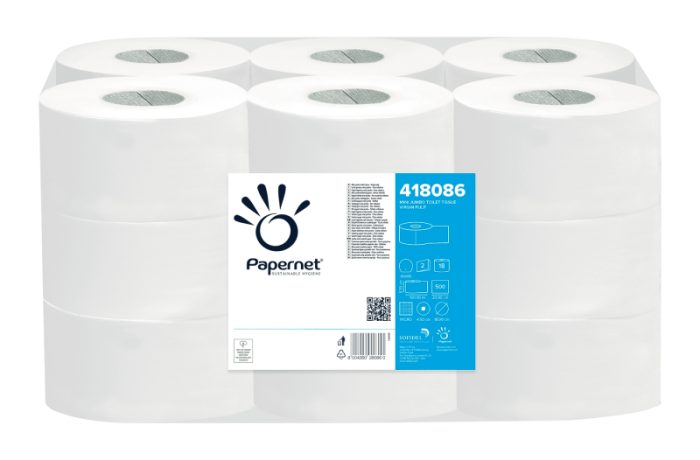
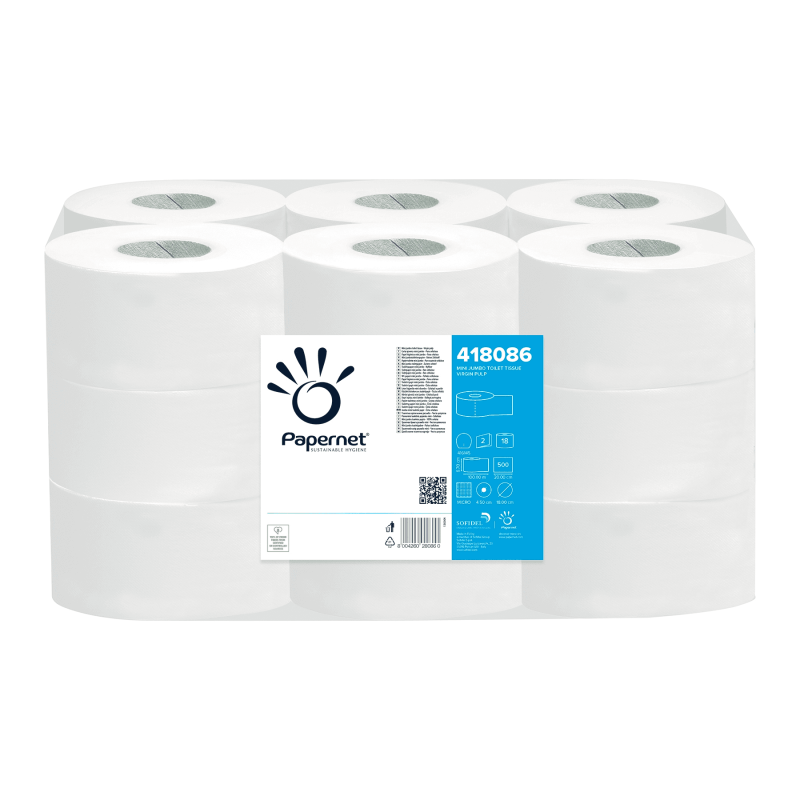
| Public-access washrooms | Industrial 18 R pulp roll with closed ABS dispenser | Controlled dispensing and fewer restocks per shift |
| Very busy washrooms with many cubicles | Eco-labelled industrial toilet paper | Certified tissue with a controlled cost per service |
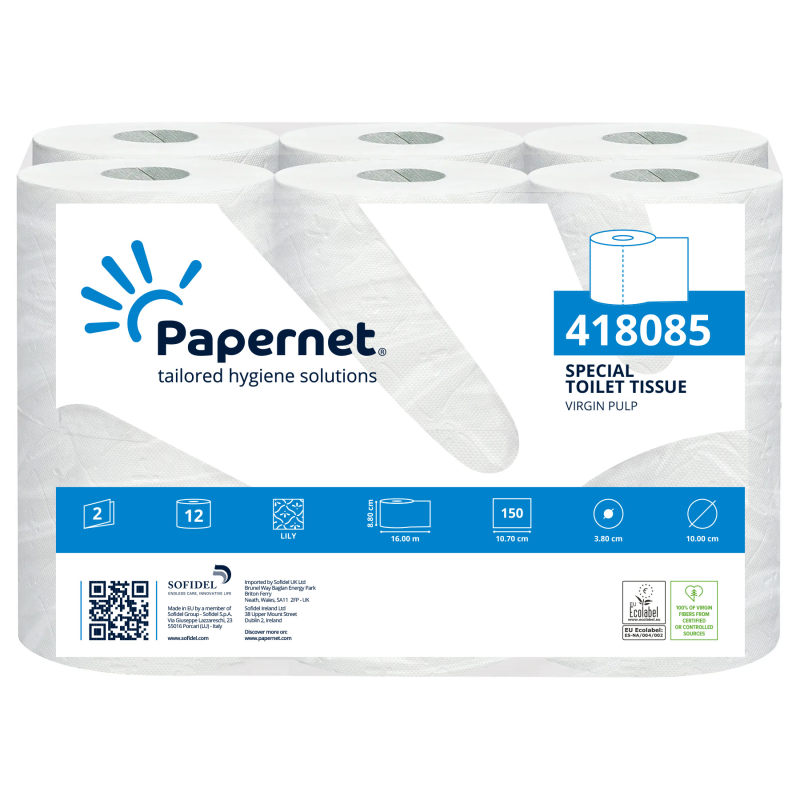
| Staff changing rooms and back-of-house | Household pulp toilet paper 96 rolls | Bulk format keeps the price per service down |
| High-traffic hand drying | Centre-feed hand towel roll and ABS centre-feed dispenser | Absorbs more with less paper per dry |
| Office or administrative washrooms | V-fold 2-ply hand towel with auto-cut dispenser | One towel per pull: no more grabbing a handful |
| All washrooms | Quilted 3-ply toilet paper, 90 rolls | High-volume format at a contained price per service |
| Staff hand hygiene | Deb Foam manual soap dispenser 1 L | Foam delivers the right dose: liquid soap gets wasted |
| Washrooms with infrequent restocking | PQ 1000 ml soap dispenser | More refills per point: fewer maintenance trips |
| Meeting rooms and canteen | V-fold hand towel, 20 packs | The right format prevents wipe and napkin overuse |
4. Foam soap saves more than liquid soap
A foam dispenser delivers air and soap mixed together, so the useful dose is far smaller than in a liquid system. In a site with hundreds of daily users, that detail turns into refills that last longer and a lower cost per wash. On top of that, the user perceives more product, which reduces the urge to press two or three times.
If the site has several low-rotation washrooms, it is worth separating the foam points from the liquid ones according to how each area is used. Not every washroom in the building needs the same system.
5. Do not buy consumables from the same supplier who sells you the cleaning
This is the most expensive mistake and the most common one. Buying the paper and soap from the company that provides your cleaning service feels convenient, but that invoice usually carries a mark-up nobody audits. The consumable becomes a hidden margin inside the service contract, and price comparison disappears.
Buying directly from a cleaning supplies distributor has three concrete advantages over that route: you see the unit price and the cost per service of every reference, you get access to a far wider catalogue of formats and brands, and you can choose the system that fits each area instead of whatever the supplier happens to hold in stock.
6. Cut the waste without lecturing the user
A sign asking people to "use less paper" does not work. What works is changing the system so that waste no longer depends on the user's goodwill, plus a couple of maintenance tweaks:
- Replace free-rolling toilet paper with dispensing systems that deliver one sheet or one dose per action.
- Switch hand soap to foam in intensive-use areas.
- Check the height and position of the dispenser: a badly placed dispenser gets used badly and empties sooner.
- Remove the spare paper stashes kept inside the cubicles, which is the quietest form of waste of all.
7. Buy on annual cost per service, not by the box
The most solid way to control this spend is to turn the purchase into a cost-per-service contract. Instead of paying per box, you set what it costs to look after each user for a year and deliver the consumable needed to cover it.
That model has three practical consequences: the budget becomes predictable, restocking is planned and supply outages stop, and the supplier has an incentive to deliver the format that actually performs. It is the route we use with schools and care homes, where seasonality wreaks havoc on purchasing forecasts.
Frequently asked questions about saving on hygiene consumables
How much can you really save on toilet paper and soap?
It depends on the starting point. In sites that buy consumables inside a cleaning contract and use open dispensers, moving to controlled dispensing with direct purchasing is usually the item with the most headroom. Measuring real consumption is the first thing to do before promising any figures.
Is it worth changing the dispensers in a building that is already running?
Almost always yes, because the cost of the dispenser is paid for by the paper that stops being wasted. The sensible approach is to start with the highest-traffic areas, measure consumption before and after, and expand only where the saving is confirmed.
Is domestic or industrial toilet paper better?
Industrial, in almost every washroom with medium or high traffic. Long-length rolls cut restocking and breakage, and the cost per service drops even though the pack price is higher. Domestic works in low-use areas or where the existing dispenser demands it.
What should I buy first on a tight budget?
Start with hand drying, which is the item where a system change shows up soonest, and with foam soap dispensers. Industrial toilet paper with a closed dispenser is the natural next step.
Consumables and dispensers we use in these cases
We have gathered the most in-demand references for high-traffic sites into one block. All of them are live products and ship with their technical data sheet.
- Toilet paper: industrial 18 R pulp and eco-labelled industrial rolls.
- Toilet paper dispensers: closed industrial ABS, to prevent free access to the roll.
- Hand towel rolls and V-fold towels for each type of washroom.
- Centre-feed paper dispensers and auto-cut dispensers.
- Soap dispensers: foam, liquid and manual depending on the area.
- Napkins and tablecloth rolls for canteens and meeting rooms.
- Personal hygiene and hand sanitisers for the hygiene side of the order.
- Disinfectants, general cleaners and floor cleaners to complete the order.
Ask for a cost-per-service review
If you run a high-traffic site and want to know what real margin you have on the table, we can review your consumption, propose the right format per area and work out the cost per service of each option. It is a free analysis with no commitment.
Write to [email protected] or speak to one of our sales team and we will put together a quote with the specific references for your site. If you just need a first estimate, tell us the number of washrooms, the approximate daily footfall and the formats you use today.
Share this content