
School cleaning supplies: special pricing and free dispensers
School cleaning supplies: what a centre really needs
Cleaning in a school is not the same as cleaning a standard office. A school has classrooms, toilets, dining areas, corridors, gyms, changing rooms, staff rooms and sometimes early years areas, each with different levels of contact, traffic and risk. The right plan combines reliable consumables, safe dispensing, clear routines and products that make daily work easier for caretakers and cleaning teams.
At LimpialoTodo.com we supply professional cleaning products and washroom consumables for public, private and semi-private schools, nurseries, academies, colleges and cleaning companies that manage educational facilities. The objective is simple: keep hygiene standards high, reduce stock problems and make purchasing more predictable across the academic year.
This guide explains how to choose school cleaning supplies, when free dispensers can make sense, which consumables should be standardised and how to organise a practical hygiene system without turning every order into an emergency.
Why hygiene matters more in schools
Schools bring together many people in closed spaces for long periods. Children touch desks, doors, taps, toilet cubicles, sports equipment and shared materials all day. That constant contact means cleaning is not only about appearance. It affects absenteeism, comfort, confidence and the perception families have of the centre.
A good school hygiene plan should cover three goals:
- Continuity: toilets and classrooms must have the basics available every day, especially toilet paper, hand soap and hand drying systems.
- Control: dispensers, formats and stock levels should prevent waste, misuse and unexpected shortages.
- Safety: products must be suitable for professional use, easy to dose and stored away from pupils.
For this reason, schools usually benefit from working with a professional supplier instead of buying different products ad hoc from general retail channels.
Core cleaning products for schools
The exact list depends on the size of the centre, age range, timetable, canteen activity and whether cleaning is handled internally or by an external contractor. Even so, most schools need a stable base of products.
| Area | Recommended supplies | Why it matters |
|---|---|---|
| Toilets | Toilet paper, soap, paper towels, dispensers, surface cleaners, air care | High traffic, high visibility and daily consumption |
| Classrooms | General cleaners, cloths, paper, bins, disinfectants when required | Shared desks, handles and learning materials |
| Dining rooms | Degreasers, food-area cleaning products, disposable paper, hand hygiene | Grease, spills and stricter hygiene routines |
| Corridors and halls | Floor cleaners, mops, buckets, carts, signs | Heavy traffic and visible dirt during the day |
| Gyms and changing rooms | Floor cleaning products, disinfectants, odour control, paper and soap | Sweat, moisture and shared surfaces |
Standardising these categories improves purchasing, simplifies training and reduces the number of products stored on site.
Washroom consumables: the highest-impact category
Toilets are often the first area where hygiene problems become visible. If there is no paper, no soap or no way to dry hands, the rest of the cleaning plan loses credibility. For schools, washroom consumables are usually the highest-impact recurring purchase.
The key products are:
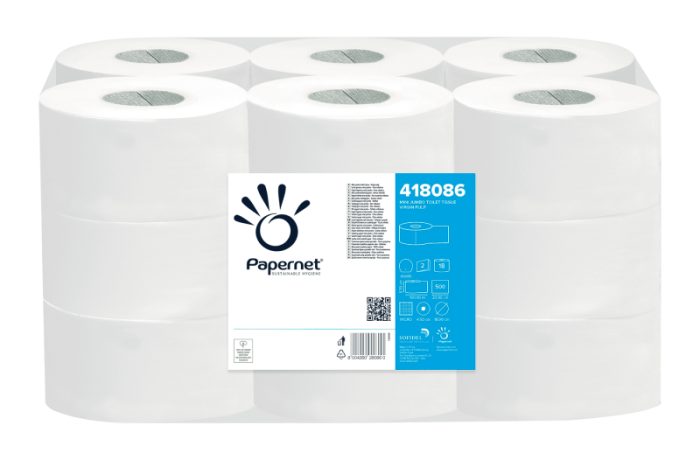
- toilet paper dispensers and compatible rolls or folded systems;
- folded paper towel dispensers for controlled hand drying;
- automatic paper dispensers for higher-control environments;
- paper roll dispensers for washrooms with heavier traffic;
- hand soap for light dirt and daily hygiene;
- hand soap for heavier dirt in maintenance, workshops or technical areas.
Choosing the right dispenser system can reduce waste, limit vandalism, make refilling easier and keep consumption more stable during the term.
Free dispensers for schools: when they make sense
Many schools ask whether free dispensers are worth it. The answer depends on consumption, installation points, product compatibility and the level of commitment the centre wants with its supplier. In the right case, free dispensers can be a practical way to upgrade toilets without a high initial investment.
Free dispenser programmes are especially interesting when a school wants to:
- replace mismatched or broken dispensers across several toilets;
- standardise toilet paper, soap and hand drying formats;
- control consumption better during the academic year;
- reduce emergency purchases and last-minute substitutions;
- make replenishment easier for cleaning and maintenance staff.
The important point is not the word “free”. The important point is whether the dispenser, refill and service model fit the real use of the school. A dispenser that is too small, too fragile or difficult to refill will create problems even if the initial installation costs nothing.
How to choose the right dispenser system
A school should choose dispensers based on daily use, age of pupils, maintenance access and total cost per use. The best option is not always the cheapest unit price. It is the system that keeps toilets supplied, reduces waste and avoids constant replacement.
| Decision | What to check | Business effect |
|---|---|---|
| Capacity | Number of users between refills | Fewer interruptions and less staff time |
| Robustness | Resistance to intensive school use | Lower breakage and replacement cost |
| Consumption control | Sheet-by-sheet or controlled dispensing | Less waste and cleaner washrooms |
| Refill availability | Stable supply of compatible consumables | Fewer emergency purchases |
| Ease of cleaning | Smooth surfaces and accessible covers | Better hygiene and faster routines |
For a complete washroom range, start with professional dispensers and then match paper and soap formats to each area of the school.
Special pricing for educational centres
Schools usually work with planned budgets, term calendars and purchasing approval processes. That is why a stable supply proposal is often better than a one-off product list. A professional quote can group the products by area, estimate consumption and propose formats that reduce total cost over time.
Special pricing for schools can be useful when the centre needs recurring supply of:
- toilet paper, paper towels and soap;
- general cleaning chemicals and floor care products;
- cloths, mops, buckets, cleaning carts and accessories;
- protective gloves and basic PPE for staff;
- waste bags and other janitorial supplies.
The commercial objective is not simply to lower the price of one item. It is to reduce the real annual cost of keeping the school clean and stocked.
Cleaning routines by area
Buying the right products is only half the job. The other half is assigning them correctly. A practical school cleaning plan should separate daily tasks, periodic deep cleaning and reinforcement after incidents, events or outbreaks.
Toilets and changing rooms
Check paper, soap and hand drying systems several times a day, especially during breaks and lunch service. Clean contact points such as handles, taps, flush buttons and dispenser fronts. Use professional cleaners and disinfectants according to the product label and the centre's protocol.
Classrooms and offices
Focus on desks, chairs, switches, door handles, keyboards, shared devices and teacher areas. Avoid excessive product use on delicate surfaces and make sure cloths are changed or washed frequently.
Dining rooms and kitchens
Food areas need clear separation between cleaning and disinfection. Remove visible dirt and grease first, then apply the appropriate hygiene product when required. For grease-prone areas, professional degreasers and correct dosing save time and improve results.
Floors and corridors
Use floor products suitable for the surface. Corridors need frequent dust and dirt removal because they carry soil into classrooms, toilets and offices. Wet floor signs and correct dilution are essential for safety.
Eco options for schools
Many educational centres want to improve sustainability without losing hygiene performance. This can be done by selecting concentrated products, controlled dispensers, certified paper where appropriate and formats that reduce packaging waste.
Eco choices should be judged by the whole system: dose, transport, packaging, refill frequency, user behaviour and cleaning result. A product that requires double the quantity or causes more re-cleaning is not automatically the most sustainable option.
For centres with environmental criteria, it is worth reviewing paper formats, soap consumption, concentrated cleaners and the possibility of reducing the number of references stored on site.
Common purchasing mistakes in school cleaning
- Choosing only by unit price: cheap products can become expensive if they are consumed too quickly or cause more work.
- Mixing too many formats: different dispensers and refills make stock control harder.
- Underestimating peak use: breaks, lunch, sports and events change consumption patterns.
- Not checking compatibility: paper and soap must fit the installed dispensers.
- Buying without a replenishment plan: emergency orders tend to cost more and create stress.
Checklist for a school hygiene supply review
- List every toilet, changing room, classroom, dining area and staff area.
- Count current dispensers and note broken, mismatched or missing units.
- Review monthly consumption of paper, soap, bags and core chemicals.
- Identify products that are duplicated or rarely used.
- Check whether cleaning staff have the right accessories and protection.
- Define minimum stock levels before each term starts.
- Ask for a professional quote grouped by area and consumption.
If you need a complete setup, combine cleaning equipment, washroom systems and consumables in one controlled purchasing plan.
How LimpialoTodo.com can help
We work with schools and professional cleaning teams that need reliable products, practical advice and predictable replenishment. We can help you review your current consumables, choose dispenser systems and prepare a supply proposal adapted to the size and rhythm of your centre.
For school toilets and shared areas, the most common starting point is a review of dispensers, hand hygiene products, paper formats and cleaning accessories. From there, the centre can standardise references and reduce day-to-day friction.
If your school wants special pricing or is considering free dispensers for toilet paper, hand towels or soap, contact LimpialoTodo.com and we will help you prepare the right combination for your facilities.
FAQ: school cleaning supplies
Can a school get free dispensers?
In many cases, yes, depending on the number of installation points, expected consumption and the refill system selected. The best approach is to review the school layout and recurring needs before choosing the dispenser model.
What are the most important consumables for a school?
Toilet paper, hand soap, hand drying paper, waste bags, general cleaners, floor products and cleaning accessories are usually the core consumables. The exact mix depends on the size and type of centre.
How can a school reduce cleaning costs?
Standardise dispensers, control consumption, use compatible refills, choose concentrated products where suitable and avoid last-minute emergency purchases. Total cost per use is more useful than unit price alone.
Are eco cleaning products suitable for schools?
Yes, when they deliver the required cleaning result and fit the centre's routines. Concentrated products, controlled dispensing and responsible paper choices can reduce environmental impact without weakening hygiene standards.
Do cleaning companies need a different supply plan for schools?
Usually yes. A contractor needs predictable stock, clear product allocation by area and formats that cleaning staff can refill quickly. This reduces incidents and protects service quality.
Share this content