
How to clean a leather sofa without damaging the leather
Before you start: the step almost everyone skips
The single most expensive mistake with a leather sofa is attacking the stain directly with whatever cleaner is closest to hand. Leather is not cleaned in one pass, it is cleaned in three: dry soil first, then grease, then conditioning. Get that order wrong and you will see the symptoms weeks later, not immediately. Rings and tide marks, colour loss along the wear points, and the stiff, cardboard feel that no amount of polish can hide.
Four rules before you touch anything:
- Never soak the leather. Excess water distorts the hide and leaves marks that follow the seams.
- Always test on a hidden area. The underside of a cushion, the back of the frame, a patch under the seat that nobody examines.
- Keep aggressive chemistry away. No alcohol, ammonia, bleach, acetone, universal stain removers, or perfumed wipes containing solvents. They strip the finish, and the finish is what protects the hide.
- Let it air dry. No hairdryers, no radiators, no direct sun. Heat is what turns soft leather brittle.
What you actually need
You do not need a cupboard full of products. You need four things done properly:
- A vacuum with a soft brush attachment. See our cleaning equipment range if you need one for commercial use.
- Two microfibre cloths, one damp and one dry. Two, not one: the dry cloth is what stops rings forming.
- A sponge or a soft-bristled brush, clean and used only for this.
- Distilled water rather than tap water. Tap water leaves mineral deposits, and on dark leather those deposits show as pale rings once dry.
A neutral soap, or a general purpose cleaner at a safe dilution, is an acceptable fallback if you have no dedicated leather cleaner, no more than a drop in a bowl of distilled water. It is a maintenance option, not a repair option. For grease, body oils and soil that has been worked into the grain over years, a neutral dish soap will not shift it, and the harder you scrub to compensate, the more finish you remove.
For a uniform, professional result the combination that works is a dedicated leather cleaner to lift the soil without stripping the finish, followed by a leather protector to replace the oils and seal the surface. Both are in our workshops and car washes range, and both are stocked in single units and in trade quantities.
Step by step: cleaning a leather sofa without damaging it
1) Vacuum first, and do it properly
Work the soft brush attachment across the whole sofa, and slow down at the seams, the creases and the piping. This is not cosmetic housekeeping. Dry dust and grit act as an abrasive. Every wipe afterwards grinds that grit into the finish, and that is how you get a shiny, worn patch on an armrest while the rest of the sofa still looks new.
2) Weekly maintenance in under two minutes
For routine upkeep, barely dampen a microfibre cloth with distilled water and pass it over the surface. Follow immediately with the dry cloth. This removes the light film of dust and hand grease that builds up on the arms and headrests, and it costs you almost nothing. Do not go further than this on a weekly basis. Leather does not need washing weekly, it needs dusting weekly.
3) For spots: distilled water and a trace of neutral soap
Dampen a cloth with distilled water and add the smallest amount of neutral soap. Work gently in circles, and only on the affected area. Lift the residue with a second cloth dampened with cold water alone, then dry immediately. The cold water rinse matters: it removes soap film, and soap film left in the grain attracts dust and dulls the surface.
Using dedicated leather products (the method we recommend)
If you want a result with no rings, no patchy tone and a genuine removal of accumulated grease, a specific leather cleaner is what does it. The reason is simple: these products are formulated to lift soil at the right pH for a finished hide, so you clean effectively without scrubbing the finish off. Cleaning harder is not the answer; cleaning with the right chemistry is.
1) Cleaning with a dedicated leather cleaner
A soap-based neutral detergent formulated for leather surfaces and hides. Applied correctly:
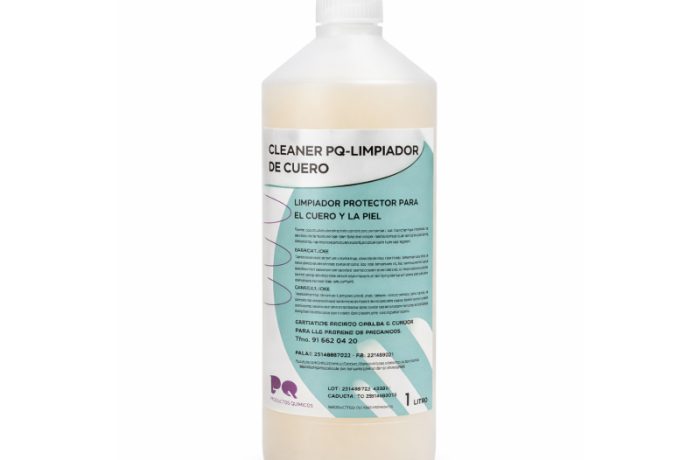
- Dilute the product in a bowl of water at 5%, following the label. We use PQ Cleaner Leather Cleaner 1 L, a soap-based neutral detergent made for finished hides. A 1 litre bottle makes 20 litres of working solution, which is why cost per litre of working solution is the figure that matters, not the price on the bottle.
- Apply with a sponge or soft brush across the entire surface, not only where you can see soil. Leather darkens where it is wet, and cleaning only the dirty panels leaves a visible tonal difference once dry.
- Lift the loosened soil with a damp microfibre cloth, rinsing the cloth as you go rather than dragging the soil back in.
- Leave for 2 to 3 minutes. Do not let the product dry on the surface.
- Finish with a dry microfibre cloth, rubbing with moderate pressure until the leather shows its natural sheen rather than a wet gloss.
2) Feeding and protecting afterwards
Once the surface is completely dry, apply PQ Gel Leather Protector 500 ml, a gel that feeds the hide and rebuilds the protective layer. This is the step that most people skip and it is the one that decides how long the sofa lasts. Finished leather is a skin: cleaning removes some of its oils, and if you do not put them back, the hide dries, tightens and eventually cracks at the flex points.
- Put a small dose on a dry microfibre cloth. A little goes a long way; over-application leaves a tacky surface that attracts dust.
- Spread a thin layer across the whole sofa with even passes.
- Let it settle, then buff lightly for an even finish.
Important: neither the cleaner nor the protector should be used on suede, nubuck or aniline leather. Those finishes are open-grained and untreated, and any surfactant or oil will mark them permanently.
Heavily soiled leather: panel by panel
Where the build-up is concentrated, which in practice means the armrests, the headrests and wherever hands and heads land repeatedly, a full pass over the whole sofa at once is the wrong approach. Work panel by panel:
- Divide the sofa into sections: seat one, seat two, backrest, left arm, right arm. This keeps drying times even and stops you over-wetting one area while you work on another.
- Apply the diluted cleaner, agitate with a sponge or soft brush, and lift the residue before it dries. Product left to dry on the surface is what causes the mottled, patchy look.
- Dry, then finish with the protector. Skipping the protector on a heavy clean is the number one reason leather ends up thirsty and then cracks.
Household remedies: what works and what quietly ruins the sofa
The internet is full of quick fixes. Some are harmless, some cause damage that only appears three weeks later, when the colour lifts or the hide stiffens and you cannot connect it to what you did.
- Baby wipes: only the very neutral type, without alcohol or strong perfume, and only as a one-off. Dry afterwards with microfibre. Not a maintenance method.
- Citrus, lemon or orange: can alter the finish, particularly on dyed or delicate hides. Avoid.
- Egg white: leaves residue and an uneven shine. Avoid.
- Beer, olive oil, vinegar: uncontrollable, and the oil and vinegar films attract dust and go rancid. Avoid.
- Multipurpose spray cleaners: usually alkaline or solvent-based, and the quickest way to strip a finish. Avoid on leather, always.
If the goal is to keep the sofa looking new rather than to win an argument on a forum, the reliable route is neutral cleaning plus a proper protector.
Maintenance calendar for a leather sofa that lasts years
- Weekly: vacuum the seams and creases with the soft brush.
- Every 2 to 4 weeks: light wipe with a barely dampened microfibre cloth, followed by a dry one.
- Twice a year: full clean with a dedicated leather cleaner, followed by a protector. If the sofa is in daily commercial use, move to quarterly.
- Always: keep it out of direct sunlight and away from radiators. Heat dries the hide and accelerates cracking. If the sofa is in a washroom-adjacent area, keep hand hygiene supplies separate so that soap and paper do not end up on the leather.
In offices, waiting rooms, hotels and reception areas, the same calendar applies but the frequency doubles. For the rest of the daily routine in those spaces we stock cleaners and degreasers, disinfectants and a full janitorial supplies range. A leather sofa in a public area takes in a week what a domestic sofa takes in a month, and the cost of a replacement is where the real budget damage sits. One protector application costs a few euros and a few minutes; replacing a three-seat leather sofa in a reception area does not.
Common questions
How often should I clean a leather sofa?
Weekly vacuuming, a light wipe monthly, and a full clean with protection twice a year. If you have children or pets, increase the frequency of the light wipe rather than of the deep clean. Over-cleaning dries leather out; under-conditioning cracks it.
Can I just use water?
For routine maintenance, yes, as long as it is a small quantity and preferably distilled. For grease or soil that has bonded to the surface, water alone just moves it around, and a dedicated leather cleaner is both more effective and safer than the scrubbing you would need to compensate.
What if the stain does not lift first time?
Do not scrub harder. Repeat the gentle process, let it dry between attempts, and do not mix products. On leather, patience beats force every time. If a stain survives three careful passes, stop and call a specialist rather than escalating the chemistry.
Do these products work on suede or nubuck?
No. A leather cleaner and protector of this type must not be used on suede, nubuck or aniline leather. Those surfaces need their own products and their own method.
Is it worth buying a specialist cleaner instead of neutral soap?
If the sofa is cleaned twice a year and nothing is ever spilled on it, neutral soap will do. If it is in commercial use, if there are people sitting on it all day, or if you have already tried soap and the arms still look greasy, then yes: the specialist product works, and the difference in result is not marginal. Look at the cost per litre of working solution at the recommended dilution rather than the price per bottle.
In short
Cleaning leather is not complicated, but it is order-dependent: dry soil out first, then grease, then condition. Clean without attacking the hide, and feed it afterwards. That single discipline is what separates a sofa that still looks good at ten years from one that is cracked and shiny at four.
For domestic use, distilled water, two microfibre cloths and a neutral soap will cover most situations. Ordering and delivery terms for professional accounts are in how to buy, deliveries and secure payment. For commercial furniture, high-use sofas, or anywhere the finish has already started to dull, the professional route is a dedicated leather cleaner applied at the correct dilution and across the whole surface, followed by a protector applied in a thin, even layer.
Share this content


